
Is Social Media Stealing Our Real-Life Relationships?
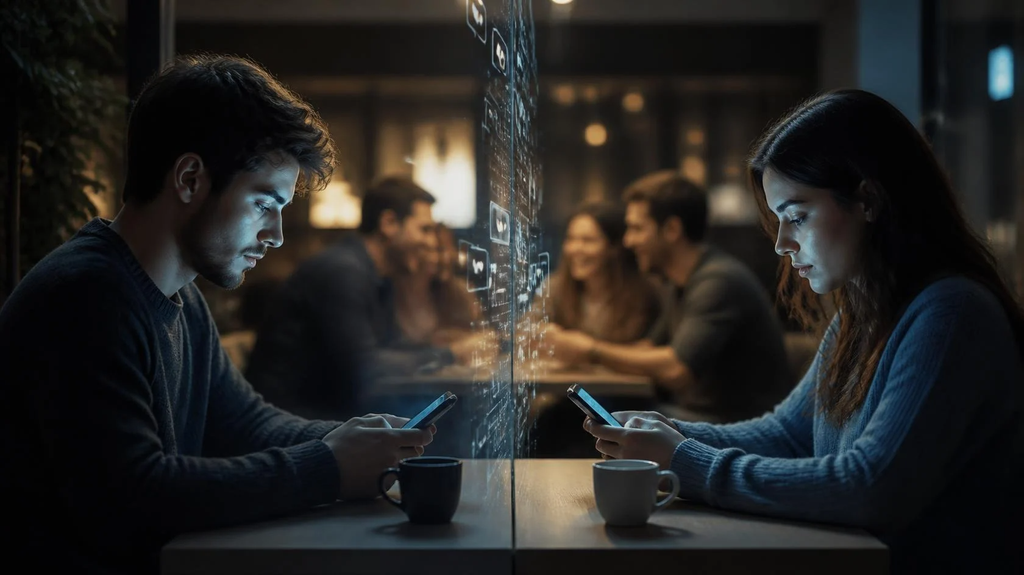
We live in an age where a “good morning” text has been replaced by a heart emoji on a story, and a phone call has become a voice note we listen to three hours later. Social media has undeniably transformed how we connect with one another — but the bigger question is whether it has strengthened our relationships or quietly hollowed them out. The truth, as with most things, lies somewhere in the middle: social media hasn’t stolen our relationships outright, but it has fundamentally reshaped what “connection” means, and not always for the better.
The Illusion of Constant Connection
Social media platforms are built on a simple promise: you will never be out of touch with the people you care about. Birthdays are announced by notifications, life updates arrive as posts, and a simple “like” lets us signal that we’re thinking of someone without actually having to think about them for more than a second. This is where the first crack appears. We have confused awareness of someone’s life with involvement in it. Knowing that a friend went on vacation because you saw their photos is not the same as knowing how that vacation actually felt for them, what they struggled with, or what they were secretly hoping for.
Psychologists often refer to this as “ambient intimacy” — a low-effort, low-depth form of connection that feels satisfying in the moment but rarely builds the kind of trust and vulnerability that real relationships require. It is emotionally efficient, but efficiency is not the same as depth.
Quantity Over Quality
Before social media, our social circles were naturally limited by geography, time, and effort. You could only maintain so many relationships because each one demanded a phone call, a letter, or a visit. Today, a single person can “maintain” hundreds or even thousands of connections simultaneously. But human beings have cognitive and emotional limits — commonly cited around 150 meaningful relationships, famously known as Dunbar’s number. When our attention is spread across hundreds of online contacts, the depth per relationship inevitably shrinks.
This is perhaps the clearest way social media reshapes relationships: it doesn’t necessarily destroy them, but it dilutes them. We end up with a wide, shallow pool of acquaintances rather than a smaller, deeper reservoir of genuine friendships.
The Comparison Trap
Another way social media interferes with real-life relationships is by changing how we perceive the relationships of others — and, by extension, our own. Scrolling through a feed full of couples on romantic getaways, friend groups on tropical trips, and families having what looks like perfect holidays can quietly plant dissatisfaction with our own, perfectly normal relationships. We start comparing our behind-the-scenes reality with everyone else’s highlight reel.
This comparison doesn’t just affect romantic relationships. It affects friendships too. Seeing a photo of friends hanging out without you can trigger feelings of exclusion, even if the omission was entirely innocent. Ironically, a tool designed to bring people together often ends up amplifying insecurity and social anxiety.
Physical Presence, Mental Absence
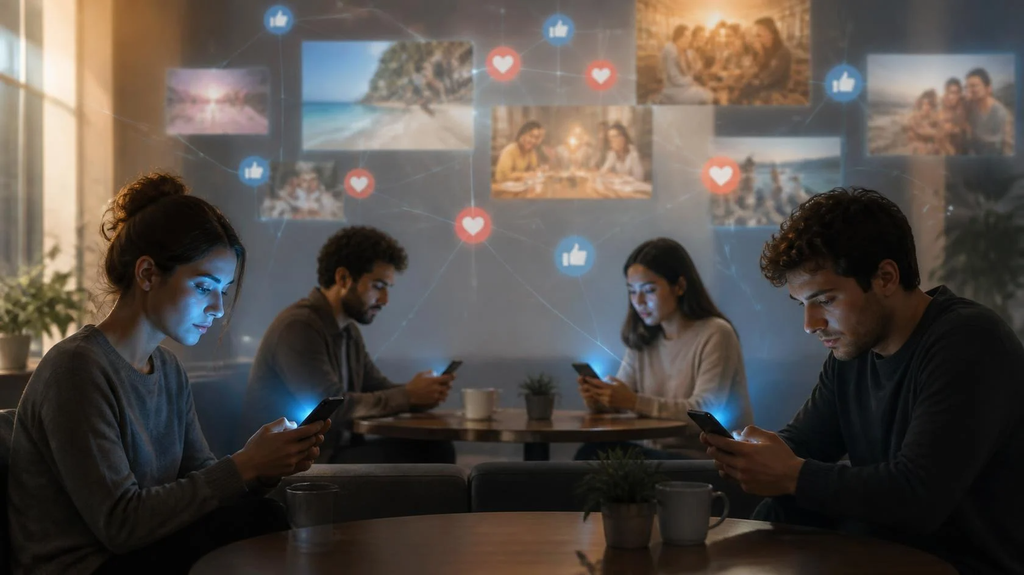
Perhaps the most visible symptom of this shift is a phenomenon now common enough to have its own name: “phubbing” — phone snubbing. It’s the experience of sitting across from someone, physically present, while they (or you) are mentally elsewhere, scrolling through a feed. Family dinners, coffee dates, and even romantic evenings are increasingly punctuated by glowing screens. Studies on relationship satisfaction have repeatedly shown that frequent phone use during shared time correlates with lower relationship satisfaction and increased conflict.
This is where social media’s cost becomes most tangible. It’s not that we’re spending time with the wrong people online instead of the right people offline — it’s that we’re often doing both at once, and doing neither well.
But It’s Not All Bad
To paint social media purely as a relationship destroyer would be inaccurate and unfair. For people separated by distance — migrant workers, students studying abroad, long-distance couples, families spread across countries — social media has been nothing short of a lifeline. Video calls, shared photos, and instant messaging have made it possible to stay woven into each other’s daily lives in ways that letters and expensive long-distance calls never could.
Social media has also helped people find communities they otherwise never would have. Individuals with rare interests, niche hobbies, or marginalized identities have found belonging and support online that wasn’t available to them locally. For introverts or socially anxious individuals, digital communication can serve as a comfortable entry point into building relationships that later translate into real-world closeness.
The technology itself, then, is neutral. It is a tool. What determines whether it strengthens or weakens our relationships is how we use it.
Reclaiming Real Connection
If social media is reshaping relationships rather than outright stealing them, the solution isn’t necessarily to abandon it — for most people, that isn’t realistic or even desirable. Instead, it’s about being intentional.
Set boundaries around device use. Simple practices — phone-free meals, no screens during conversations, designated “offline hours” — can dramatically improve the quality of time spent with loved ones.
Prioritize depth over breadth. Rather than maintaining surface-level contact with hundreds of people, invest real time and energy into the relationships that matter most.
Use social media as a supplement, not a substitute. Let it be the bridge between real-world meetings, not the replacement for them. A message can schedule a coffee date; it shouldn’t replace one indefinitely.
Practice digital honesty. Resist the urge to curate a highlight reel that misleads both yourself and others. Authentic sharing fosters more meaningful engagement than performative posting.
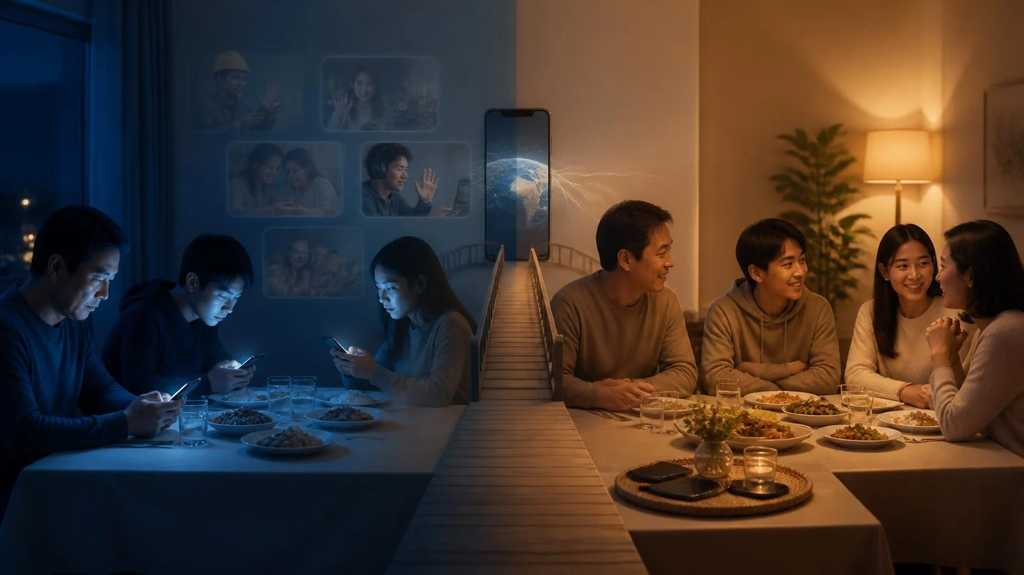
Social media hasn’t stolen our real-life relationships in some dramatic, irreversible way — but it has quietly changed the terms of engagement. It has made connection easier to access and harder to deepen. It has widened our circles while thinning the bonds within them. The responsibility, ultimately, falls on us as users to decide whether we let our screens mediate our relationships or whether we use them as a tool to enrich the time we spend, phone down, fully present, with the people who matter most
In the end, the question isn’t whether social media is good or bad for relationships — it’s whether we’re willing to be intentional enough to make sure it serves our relationships, rather than silently replacing them.