
The Decline of Face-to-Face Social Interaction
Online interactions now play a significant role in our daily lives due to the quick development of digital communication. Although technology facilitates quicker and easier communication, it can also decrease in-person interactions and erode social ties in real life. Relationships, communication abilities, and our sense of personal connection may all be impacted by this chance
Advantages
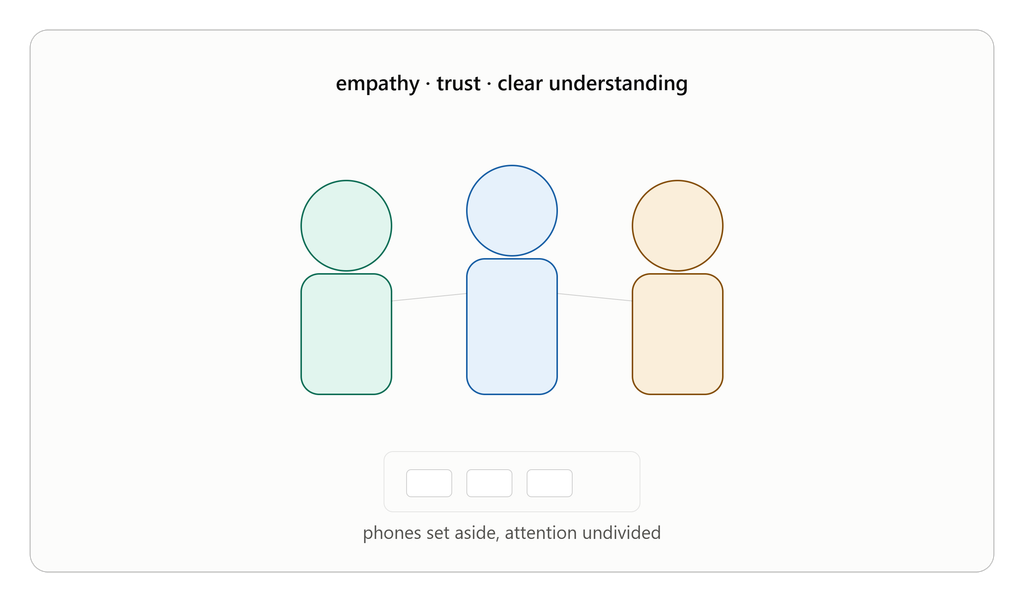
Richer emotional understanding. In person, people read tone of voice, facial expressions, posture, and timing all at once. This layered feedback allows for genuine empathy — noticing when a friend is upset even if they say they’re fine — something a text message rarely conveys.
Stronger trust and bonding. Physical presence activates a different kind of social bonding. Eye contact, a handshake, or simply sharing space with someone builds trust faster than words on a screen. This is why important conversations — resolving conflict, negotiating, comforting someone in grief — still feel incomplete over chat.
Better communication skills. Face-to-face conversation forces people to think on their feet, tolerate silence, and adjust their words in real time based on the listener’s reaction. These are skills that atrophy when most communication happens through pre-typed, editable messages.
Reduced misunderstanding. Text lacks tone, so sarcasm, humor, or concern can be misread. In person, immediate clarification is possible — a raised eyebrow or a laugh instantly corrects a misinterpretation before it grows into conflict.
Deeper sense of belonging. Shared physical experiences — a meal, a walk, a hug — create memories and a felt sense of closeness that digital interaction cannot fully substitute. This is part of why heavy digital users, despite being constantly “connected,” often report higher loneliness.
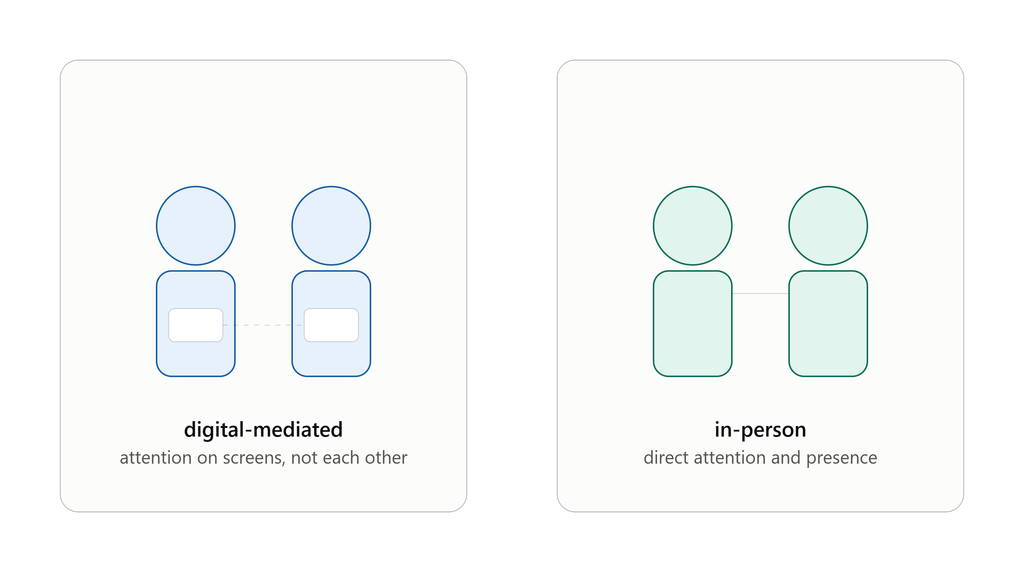
Undivided attention. In-person time, when phones are absent, offers full presence — no notifications competing for focus. This undivided attention itself communicates value and respect to the other person, reinforcing the relationship.
As digital convenience becomes the default, these advantages are quietly being traded away. Recognizing what is lost is the first step toward protecting space for real, unmediated human connection in an increasingly online world.
Disadvantages
Face-to-face interaction, despite its strengths, comes with real limitations that make digital communication appealing in comparison.
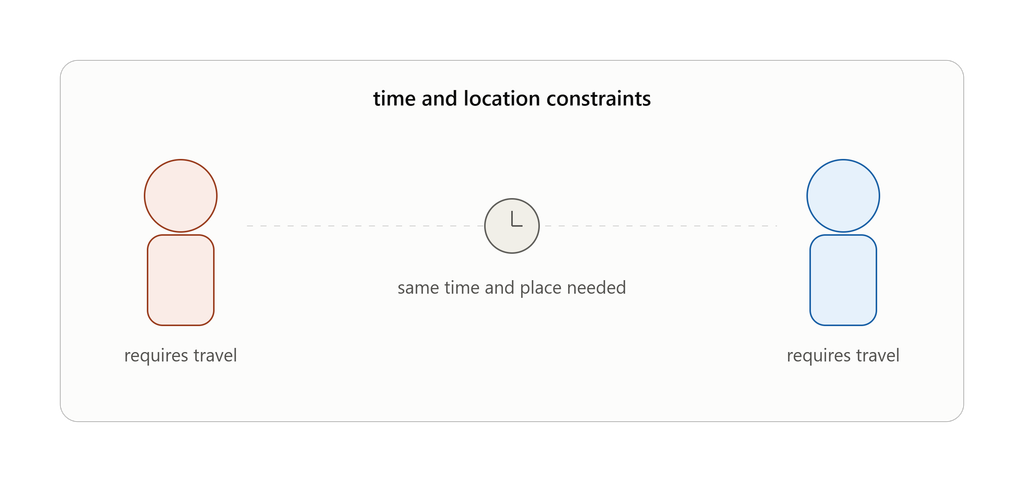
Time and location constraints. In-person meetings require both people to be in the same place at the same time. This makes spontaneous conversation difficult across time zones, busy schedules, or long distances, and can delay important discussions that a quick message could resolve instantly.
Higher emotional exposure. Face-to-face conversations leave little room to hide discomfort, nervousness, or disagreement. For people who struggle with social anxiety, this immediacy can be intimidating, sometimes discouraging them from expressing themselves honestly compared to the buffer text-based communication provides.
Difficult to document. Spoken conversations are rarely recorded or written down, making it easy to forget details or dispute what was actually said. Digital messages, by contrast, create a natural record that both parties can revisit later.
Inefficient for simple exchanges. Not every interaction needs the depth of an in-person meeting. Confirming a time, sharing a quick update, or asking a small question can take far longer face-to-face once travel, scheduling, and small talk are factored in, compared to a short message sent in seconds.
Limited reach. In-person relationships are naturally bounded by geography. Someone who only relies on face-to-face interaction has a much smaller pool of potential friends, collaborators, or communities compared to someone who also connects digitally, cutting them off from the wider world.
Vulnerability to social pressure. Physical presence can make it harder to say no, set boundaries, or exit an uncomfortable situation gracefully, whereas digital communication allows more time and distance to think before responding.
In short, face-to-face interaction is not without drawbacks. Its demands on time, emotional exposure, and physical presence explain why digital communication has become such an attractive complement — and for many everyday exchanges, a practical replacement.
In an age defined by constant connectivity, the relationship between digital communication and face-to-face interaction is not one of simple opposition, but of trade-offs that each carry real weight. Digital communication has undeniably expanded the boundaries of human connection — collapsing distance, enabling instant contact, and allowing relationships to be sustained across time zones and busy schedules that would once have made regular contact impossible. It offers speed, documentation, and reach that in-person interaction simply cannot match. Yet this convenience comes at a cost that is easy to overlook in daily life: the gradual erosion of the depth, empathy, and undivided attention that only physical presence can provide.
Face-to-face interaction remains irreplaceable in the moments that matter most. The subtle cues of tone, expression, and body language build trust and understanding in ways that text on a screen cannot replicate. Undivided attention — a rare commodity in a world of constant notifications — signals respect and strengthens bonds in a way no emoji or quick reply can. At the same time, its demands are real: the need for shared time and location, the emotional exposure it requires, and its limited reach compared to the boundless connectivity of digital platforms are legitimate reasons why people increasingly turn to their screens instead.
The lesson, then, is not to reject one mode of communication in favor of the other, but to recognize what each does well and use them accordingly. Digital tools are best suited for maintaining reach — checking in with distant friends, coordinating logistics, or sustaining large networks of loose connections. Face-to-face interaction, meanwhile, should be protected and prioritized for what requires depth — resolving conflict, comforting someone in distress, or simply being present with the people who matter most. Problems arise not from using digital communication, but from allowing its convenience to quietly replace the face-to-face moments that relationships actually depend on to thrive.
Ultimately, technology is a tool, and like any tool, its value lies in how deliberately it is used. A phone set aside during dinner, a conversation held in person rather than postponed to a text thread, a conscious choice to prioritize presence over convenience — these small decisions determine whether digital communication enriches our social lives or slowly hollows them out. As digital interaction continues to grow, the challenge for individuals and societies alike is to ensure it remains a bridge to human connection, not a replacement for it. Balancing the two, rather than choosing one over the other, is what will preserve both the reach of modern communication and the depth of real human relationships.