
From Seen to Separation: Can Messaging Habits Break Relationships?
Almost everyone has experienced that gut-punch feeling of sending a message, watching it turn to “seen,” and then… nothing. It might just be a blue tick, but the emotional storm it can trigger is very real. In modern relationships, messaging habits have quietly become a kind of silent villain — slowly, invisibly chipping away at the foundation of a relationship without anyone quite realizing it. This blog looks at how something as small as an unanswered “seen” can, over time, actually contribute to a breakup.
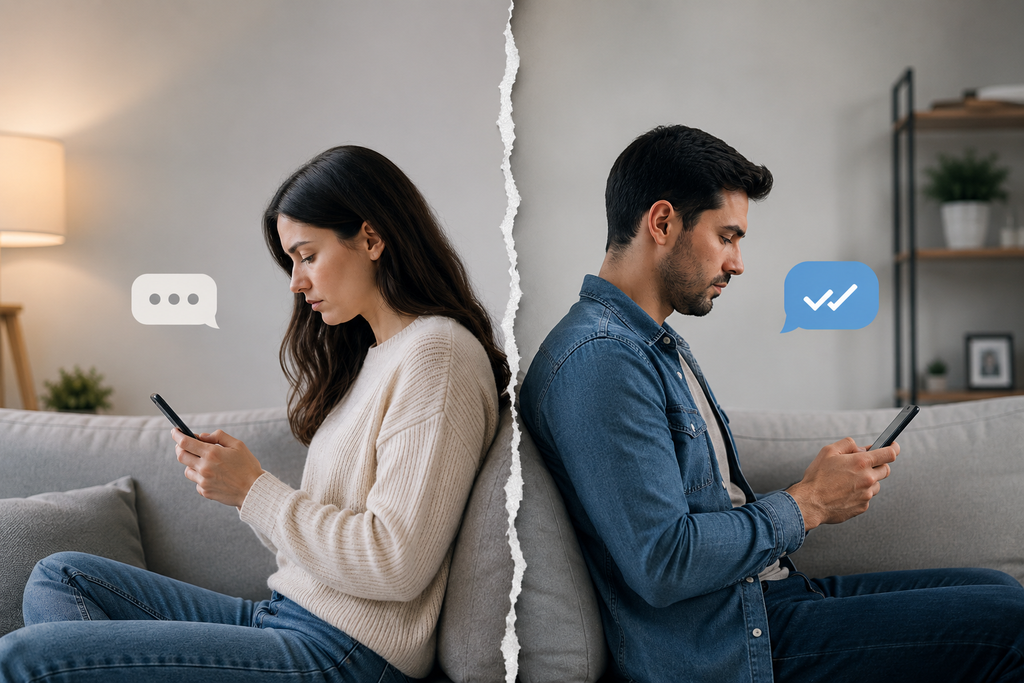
The "Seen" Zone: A New Kind of Cold War
In the past, when a communication gap came up, people talked it out face to face. Today, silence itself has become a kind of unspoken standoff. When a message goes unanswered, our minds automatically fill in the blanks — usually with the worst possible explanation. “Are they ignoring me?” “Are they busy?” “Is something wrong?” This spiral of overthinking kicks in almost instantly.
This overthinking is really the core problem. Whatever the actual reason — a busy day at work, a network issue, or simply not having the phone at hand — the person on the receiving end often experiences it as rejection. That misinterpretation, more often than we’d like to admit, becomes the spark for an argument that had nothing to do with the original issue.
How Messaging Habits Affect Relationships
1. Response Time Anxiety
There’s a growing, often unspoken expectation that a message deserves an instant reply. When that doesn’t happen, both people can end up feeling pressured — “if they don’t reply now, something must be wrong.” This constant expectation removes the healthy breathing room a relationship needs, and can quietly turn into a suffocating dynamic.
2. Overcommunication vs Undercommunication
Some people want to share every small detail of their day, which can feel overwhelming to a partner who prefers more space. Others are naturally minimal communicators, which the other person may read as disinterest — “they clearly don’t care as much as I do.” This mismatch in communication styles is often a bigger compatibility issue than couples realize.
3. Tone Misunderstanding
Tone is incredibly hard to convey through text. A simple “ok.” could mean anger, tiredness, or nothing at all — but without vocal tone or facial expression to guide interpretation, it’s easy to read it the wrong way. Face-to-face conversations naturally carry these cues; text strips them away entirely, leaving room for constant misreading.
4. Third-Party Comparisons
With social media so deeply woven into daily life, comparisons like “she replied to his story but not mine” or “he accepted her friend request instantly” have become a new source of jealousy and doubt. These small digital footprints can create unnecessary suspicion and tension that didn’t exist in relationships a generation ago.
From Seen to Separation: How Does It Actually Happen?
So how does something as small as an unanswered message end up contributing to a breakup? The answer lies in accumulated resentment. A single unread or unanswered message won’t break a relationship on its own. But when these patterns repeat — trust issues, recurring misunderstandings, and a slow build-up of emotional distance — they compound into a much bigger crack in the relationship’s foundation.
Research on digital communication suggests that messaging patterns can have a measurable impact on how satisfied couples feel in their relationships. Constant checking, unspoken expectations around response time, and repeated miscommunication all add up to something close to emotional exhaustion. And that exhaustion is often what eventually pushes someone to the point of saying, “I can’t do this anymore.”
Building Healthier Messaging Habits
Set Clear Expectations
Have an honest, direct conversation with your partner. Something as simple as, “If I don’t reply right away, it doesn’t mean I’m avoiding you — I might just be caught up with something,” can go a long way in preventing unnecessary anxiety on both sides.
Avoid Jumping to Conclusions
Instead of assuming the worst when a reply is late, just ask. A simple “hey, everything okay?” creates clarity and stops small doubts from snowballing into bigger misunderstandings.
Prioritize Quality Over Quantity
Not everything needs to happen over text. Important or emotionally sensitive conversations are almost always better handled over a phone call or in person. Save text for logistics and light check-ins, not for working through deeper issues.
Create Device-Free Time
Set aside phone-free moments together — during dinner, before bed, or on a weekend walk. This kind of undistracted presence helps build real connection in a way that screen time simply can’t replace.
Practice Empathy First
When a reply doesn’t come as quickly as expected, try assuming a reasonable explanation instead of the worst-case scenario. Thinking “they’re probably just busy” instead of “they must be upset with me” can significantly reduce unnecessary anxiety.
Messaging habits alone rarely destroy a relationship outright — but they can quietly become a major contributing factor. The small misunderstandings that start in the “seen” zone, combined with communication gaps and unspoken expectations, can gradually weaken even a strong relationship’s foundation.
In this digital age, building real connection takes conscious effort. Text messages are a tool for communication, not a substitute for genuine connection. How we communicate often matters more than how much we communicate. With that awareness, the “seen” zone can remain what it should be — a small, harmless glitch — rather than the beginning of the end.
At the end of the day, it comes down to a few simple habits: put the phone down sometimes, have real conversations, and when doubt creeps in, ask instead of assume. That alone can keep “seen” from ever becoming a problem.